
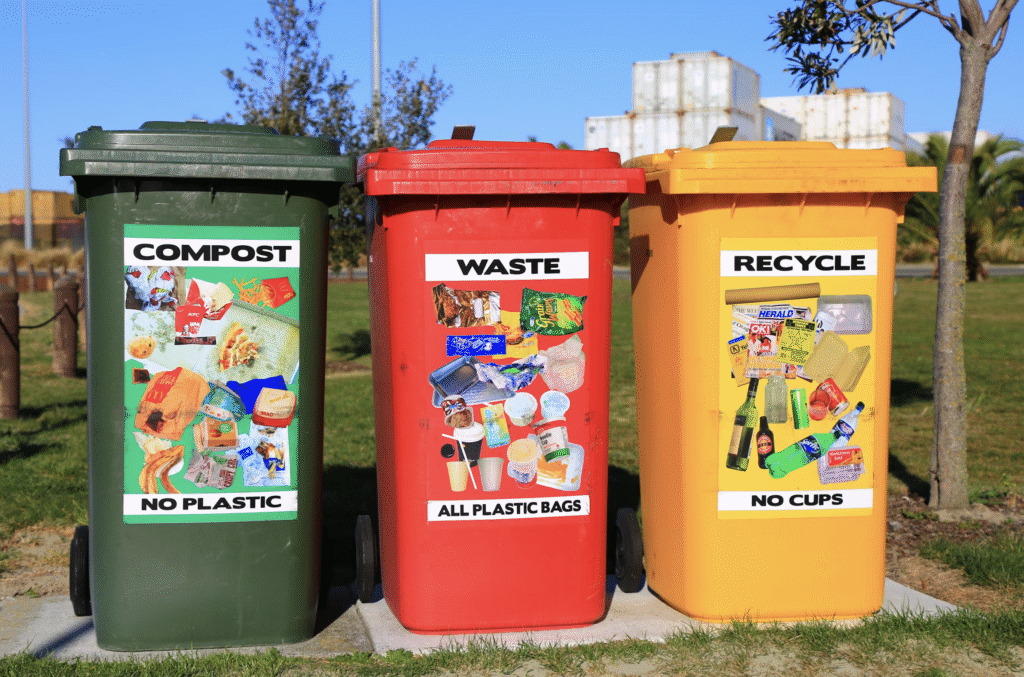

The average person doesn’t necessarily know or care about waste streams. But for businesses, this lack of knowledge can be costing you thousands of dollars.
Your waste streams can reveal hidden costs in your trash hauling expenses, while simultaneously revealing hidden opportunities for savings.
What Exactly is a Waste Stream?
Waste streams refer to the complete flow of discarded materials from the point of origination to their final disposal or processing destination. It starts when a customer or employee throws something in the trash, and it ends when the item reaches a landfill, recycling facility, or incinerator.
In business terms, your stream includes everything thrown away, including:
- Type of materials
- Volume generated
- How you sort it
- Where it goes
- How it gets processed
Whether it’s a coffee cup thrown away in the break room or construction materials going straight to the dumpster, every discarded item at your business or property has a waste stream.
A restaurant’s waste stream will look very different from a medical office’s waste stream, which looks nothing like a retail store’s waste stream or a hotel’s waste stream.
Understanding your specific waste streams matters because waste haulers don’t charge the same rates for all trash. Certain materials have different disposal costs and processing requirements (meaning you pay more for different types of waste).
Types of Waste Streams
There are lots of different types of waste streams. But the majority of what your business throws away can be put into one of the following categories:
Municipal Solid Waste (MSW)
This is your standard commercial trash. It’s the stuff that most businesses generate every day, including food waste from break rooms, office trash, packaging materials, and general waste that ends up in landfills or waste-to-energy facilities.
For the majority of businesses, MSW is the bulk of what you’re paying a waste management company to haul away. So it’s often the most expensive per ton because it requires the most processing and has the least value.
Recyclable Materials
Common recyclables include paper, cardboard, plastics, metals, and glass that can be processed and converted into new products. This waste stream has special significance because it can actually reduce your costs (more on that later).
The key challenge when discarding recyclables is dealing with contamination. When recyclable materials get mixed with food waste or other contaminants, the entire batch can become worthless and gets treated as MSW instead.
Cardboard and OCC (Old Corrugated Cardboard)
While technically a recyclable material, cardboard often warrants its own separate waste stream. This is particularly true for retail businesses, warehouses, and distribution centers.
The volume of cardboard these businesses generate makes it worth your time (and money) to have dedicated handling for this stream. OCC has a commodity value and recycling facilities actually want it. But only if it’s kept clean and separate.
Businesses can negotiate better rates or even receive rebates by establishing dedicated cardboard-only collections. And keeping it out of your general waste stream also reduces volume and weight in your primary dumpsters (also translating to lower costs there).
Organic Waste
Food scraps, yard waste, and other biodegradable materials fall into the organic waste stream category. It’s common for restaurants, grocery stores, and hospitality businesses to produce the most amount of organic waste.
But even standard offices produce more organic waste than you’d think from break rooms and cafeterias.
Organic waste can be composted or converted to energy through anaerobic digestion. So many jurisdictions now have mandates for organic waste diversion, which is making it increasingly important for businesses to learn how to manage organic waste streams.
Liquid Waste
Liquid waste streams include wastewater, oils, grease, sludge, chemicals, and other fluid materials that can’t go straight into a regular trash container. And the type of liquid waste your business may (or may not) generate varies by your industry.
For example, restaurants will have to deal with grease trap waste while auto shops have to handle car oils and solvents.
This waste stream requires specialized handling equipment and disposal methods. It’s also typically managed through separate service contracts from your regular waste hauler, and the costs can be significant if you’re not properly controlling this stream.
Improperly disposing of liquid waste can result in hefty fines and potentially environmentally liability claims against your business.
Hazardous Waste
Certain materials require even more special handling because of their chemical properties. Batteries, fluorescent bulbs, cleaning chemicals, medical waste, paint, and pesticides all fall into various hazardous waste categories.
Dry cleaners can’t just dump old cleaning solvents into their dumpsters, and even certain types of discarded pharmaceuticals at hospitals can be considered hazardous waste.
Hazardous waste streams typically have the highest disposal costs because of the specialized hauling, transportation, handling, and processing that’s required to prevent environmental contaminations or health risks.
Even small quantities of hazardous waste have strict regulatory requirements.
Construction and Demolition Debris
If your business involves any type of construction, renovation, or demolition work, then you’re generating C&D waste.
This stream includes stuff like concrete, wood, metals, drywall, asphalt, and other building materials. And it’s typically measured and priced differently than other commercial waste hauling.
Some C&D materials can be recycled. Depending on your location, you may have a local facility that specializes in processing construction debris.
Electronic Waste
E-waste includes computers, printers, phones, services, monitors, and other electronics. Some of these components can be recycled, but others are dangerous.
While commercial recycling laws vary by location, you typically can’t just throw these items in your regular dumpster because many electronic devices contain hazardous components (like lead, mercury, and cadmium).
Since some electronics do have residual value, a certified e-waste recycler may offer free pickups or potentially even pay you for large quantities. But you’ll need appropriate documentation to provide proper disposal for compliance purposes.
How Waste Streams Impact Your Costs
The type of waste you generate will directly translate to your overall waste management costs, and your waste streams are a big component of this.
Volume and Weight Changes — Haulers typically charge based on container size, pickup frequency, and sometimes weight. But a dumpster full of cardboard weighs far less than the same volume of food waste or construction debris. If you’re mixing heavy materials with light materials in the same container, you could be paying premium rates for everything based on the heaviest component.
Disposal and Tipping Fees — Every waste stream has different disposal costs at the final destination. Landfills charge “tipping fees” based on the types of materials being dumped and hazardous waste facilities charge even more. Recycling facilities may charge less, but your hauler passes those costs along to you, plus a significant markup.
Contamination Penalties — If you put non-recyclable items in recycling containers, the entire load can be rejected and charged as contaminated waste (costing even more than your regular trash). Many waste contracts include contamination fees that could kick in if a single employee throws food waste into your recycling bin.
Regulatory Compliance Costs — Hazardous waste requires manifests, special documentations, and licensed handlers. Organic waste could be subject to mandatory diversion laws. Electronic waste has special disposal requirements. In addition to potential fines, your hauler often charges more for certain types of waste because there’s more work on their end to stay compliant.
Missed Revenue Opportunities — Some waste streams can actually have value, and most businesses overlook this. If you have significant volumes of scrap metal, cardboards, and even used cooking oil could be eligible for revenue or rebates (assuming it’s kept separate and uncontaminated).
Why Understanding Waste Streams Actually Matters For Your Business
Let’s take a step back here and recognize why this really matters for your business. In theory, I’m sure you recognize that a lot of what we’ve covered so far makes sense (whether you know about this or not).
But how can you actually make these changes at your business? Can you really pay less for waste management?
Here’s what you need to take away from this:
- You’re probably overpaying for waste hauling right now.
- Taking a “one size fits all” approach to waste doesn’t work.
- Just having a separate dumpster for recyclable materials isn’t enough anymore.
- Small changes can create significant savings.
- Your waste streams can affect your negotiations with haulers.
- Managing waste streams now helps future-proof against regulatory changes.
- Sustainability expectations are real for your customers, employees, and partners.
So yes, waste stream management is definitely something you need to be thinking about. And taking control over your waste streams can literally save you tens of thousands of dollars every year.
Final Thoughts
You don’t need to be a waste management expert to benefit from understanding waste streams.
I realize you’ve got a business to run, and your trash is something that just gets thrown away and you get billed for later. But understanding what types of waste you’re generating, where it’s going, and what you’re paying for each component is really important.
Start by requesting a waste audit or detailed breakdown of your waste types.
Most businesses are surprised to learn how much recyclable or divertable materials are ending up in their highest-cost waste stream.
Once you have a grasp on the basics, you can make more informed decisions about container sizes, pickup schedules, and whether it makes financial sense to separate certain types of materials. Then you can negotiate waste contracts with knowledge of what you should actually be paying for different materials.
Start treating waste management as an expense that your business can no longer ignore. Your costs are rising, and you need to do something about it.
If you need help, get a free audit from our team here at the Cost Guards. We’ll help you identify overages, hidden fees, and save money without switching providers.